

About Me
Hi, I’m Elisa Grace. I’m a writer and developmental editor, and I spend my time inside dark, strange, ambitious fiction.
Horror, historical, speculative, stories that blend genres and refuse to behave no matter how you try to pin them down—I read them for work and have been writing them for 3 decades. (So I know what it’s like when you’re struggling to find those words to capture what’s in your head.)
What I do
My job and my mission is to be a resource to help you translate your creative vision to the written page. I tell you the truth about what your words are actually doing. Real craft feedback delivered as in-depth editorial assessments on voice, pacing, character development, pressure, plot structure, narrative arcs, reader experience (done with agents in mind as well) and more.
What I look at
All of that stuff above. I care about what’s on the page, not what’s trending, and I want to know if your vision is there in words, if the reader can feel it, follow it and refuse to put it down, or if you’ve got work to do (spoiler alert: you usually have some work to do, or you probably wouldn’t be here.)
What I deliver
Honest, direct (but not harsh) feedback aimed at your vision. It’s designed to function as a road map for how to move forward in your project toward the version of your novel that feels right to you (the one that’s in your head and needs to land on the page). I’ll address what may need your attention as an author, in addition to what’s performing absolutely beautifully (and you may not even realize it).
Who it’s for
Writers who are serious about the work and ready for real feedback (and the effort that might come with it), especially in dark literary, horror, historical, speculative, LGBTQ+ and genre-blending fiction, or any story that’s demanding more of you than you expected.
Outside of writing/editing
I’m a US expat who move abroad in 2025. I now write & work from Lisbon, where I live with my wife (a concert photographer/travel advisor) and three cats (who share one brain cell). I’m artist who enjoys repainting dolls, love horror, Halloween and exploring abandoned buildings, and I travel whenever I can get away with it (which is as often as possible.).
If your manuscript is asking more of you than you were ready for, you’re in the right place.
Welcome to Grace Editorial.
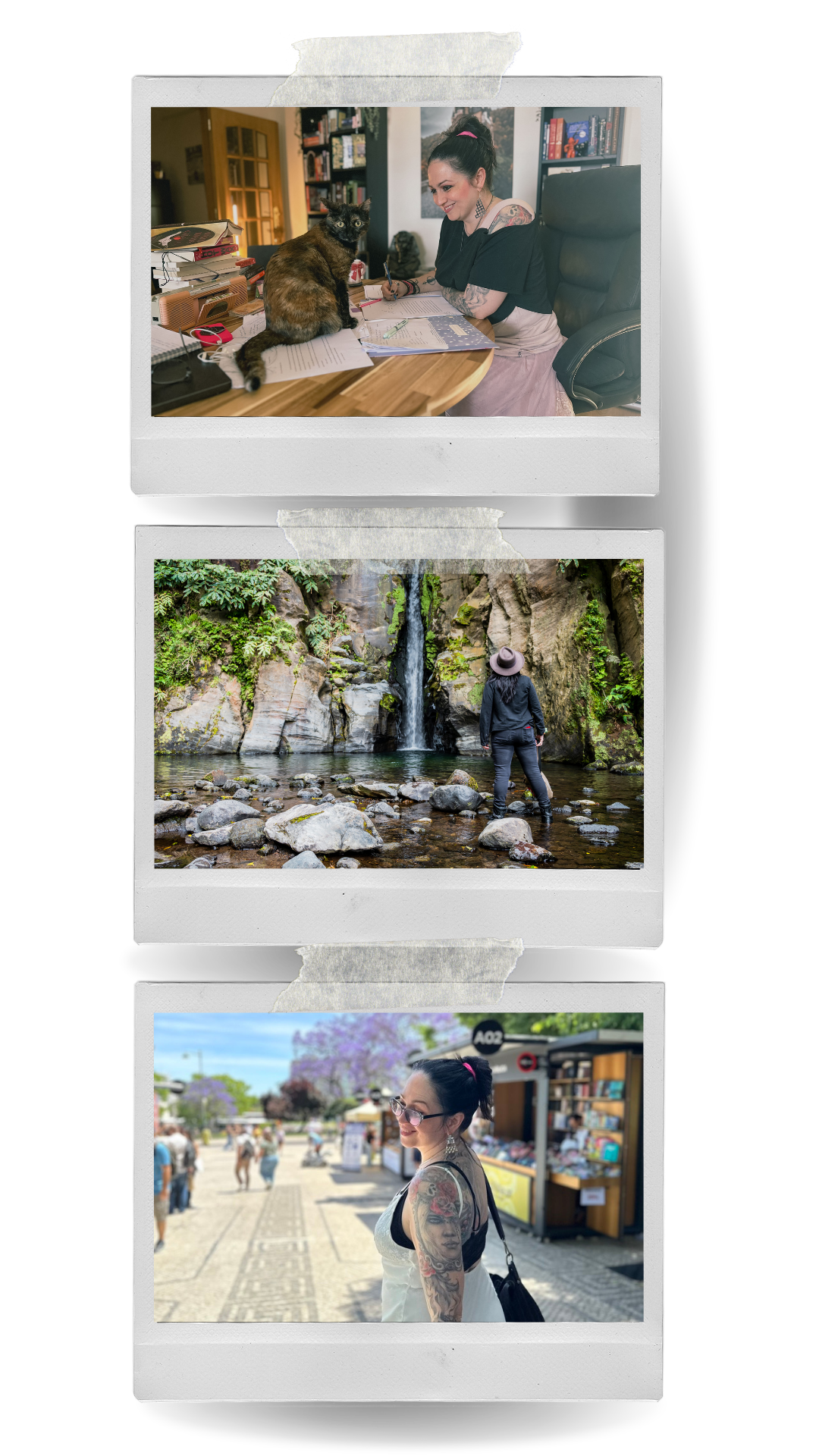
Grace Editorial is founded and led by Elisa Grace — writer, editor, and lifelong inhabitant of difficult stories.
Based in Lisbon, working remotely with writers worldwide. Still plays with toys.
Your manuscript is waiting.
So is the conversation.
Complimentary 45-minute discovery call—no pitch, no pressure.